
Popular cholesterol drugs may help prevent dementia

Having lower cholesterol levels may help protect against dementia, according to a large-scale international study led by the University of Bristol. The research, involving data from more than one million participants, found that people with genetic traits that naturally reduce cholesterol are less likely to develop dementia. The work was led by Dr. Liv Tybjærg…

Read More

Before T. rex, there was the “dragon prince”

An international team of paleontologists has identified a previously unknown dinosaur species named Khankhuuluu, believed to be the closest-known ancestor of the giant Tyrannosaurs. The discovery, led by Jared Voris and Dr. Darla Zelenitsky from the University of Calgary’s Faculty of Science, has been published in Nature. Voris, a PhD candidate in the Department of…

Read More

Scientists finally see what sparks Parkinson’s

For the first time, researchers have directly seen and measured the protein clusters thought to spark Parkinson’s disease, marking a major milestone in understanding the world’s fastest-growing neurological condition. These microscopic clusters, known as alpha-synuclein oligomers, have long been suspected as the starting point for Parkinson’s, but they have remained undetectable in human brain tissue…

Read More

Japanese scientists unveil a quantum battery that defies energy loss

Scientists from the RIKEN Center for Quantum Computing and Huazhong University of Science and Technology have carried out a theoretical study showing how a “topological quantum battery” could be efficiently designed. This innovative concept uses the topological characteristics of photonic waveguides and the quantum behavior of two-level atoms to store and transfer energy. Their findings,…

Read More

We may finally know why birds sing at dawn

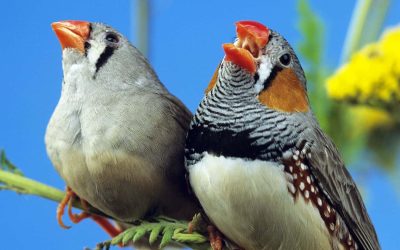
Zebra finches are commonly studied in captivity by biologists Alamy The dawn chorus of birdsong has inspired poets and nature lovers for thousands of years, but the reason why birds all over the world start the day this way is an enduring mystery. Now, a series of experiments in zebra finches (Taeniopygia guttata) suggests that…

Read More