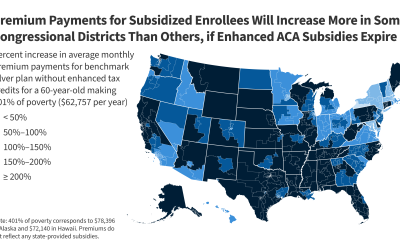

Mapping the Uneven Burden of Rising ACA Marketplace Premium Payments due to Enhanced Tax Credit Expiration

The Affordable Care Act (ACA) offers premium tax credits to help make health insurance more affordable. Under original Affordable Care Act provisions, an income cap for premium tax credits was set at 400% of the federal poverty level. Above that threshold, federal financial assistance was not available, creating a “subsidy cliff.” The American Rescue Plan…

Read More

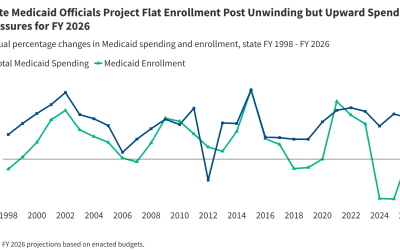
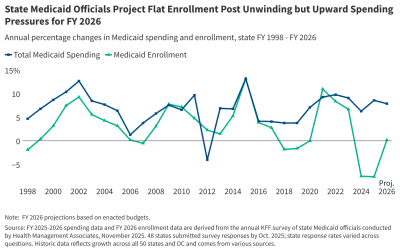
State Medicaid Officials Project Flat Enrollment Post Unwinding but Increased Spending and Budget Pressures, as States Prepare for Impact of Federal Medicaid Policy Changes

As states completed the “unwinding” of pandemic-era continuous coverage, Medicaid enrollment fell 7.6% in FY 2025 and is expected to be largely flat in FY 2026, according to KFF’s 25th annual Medicaid Budget Survey. At the same time, total Medicaid spending grew by 8.6% in FY 2025 and is expected to grow by 7.9% in FY…

Read More

Social Media Content Moderation Policies and False Claims that COVID-19 Vaccines Cause Cancer — The Monitor

VOLUME 34 November 13, 2025 Summary This volume examines recent policy changes and proposals related to social media platforms and artificial intelligence (AI) that may affect online health information and explores contradictory studies on COVID-19 vaccines and cancer. Additionally, it shares other updates relevant to health communicators, including ACOG guidance on contraceptive misinformation, an alternative…

Read More

Medicaid Enrollment & Spending Growth: FY 2025 & 2026

States are facing a more tenuous fiscal climate due to slowing revenue growth and increasing spending demands in state fiscal year (FY) 2026. Recent shifts in economic conditions as well as recent federal actions, including cuts to safety net programs and tax code changes in the recently passed reconciliation law (H.R.1), changes to the Affordable…

Read More

A View of Medicaid Today and a Look Ahead: Balancing Access, Budgets and Upcoming Changes

Context Managed Care Models. For more than three decades, states have increased their reliance on managed care delivery systems with the aim of improving access to certain services, enhancing care coordination and management, and making future costs more predictable. Across the states, there is wide variation in the populations required to enroll in managed care, the services covered…

Read More