


 Getty Images
Pharmacies have warned that private stocks of flu vaccines are running low.
It comes as lab-confirmed cases rose by 24% to 2,331 cases, from 1-7 December, compared with 1,875 the previous week.
Hospital admissions for flu increased by 15% from 860 to 986, according to the latest figures from Public Health Scotland (PHS).
Those eligible for a vaccine can access jabs from the NHS, but Community Pharmacy Scotland says people have been paying for the vaccine at pharmacies for convenience.
“It’s a mixture,” said policy and development head Adam Osprey.
“Some people are saying to us that they are running low while others have completely run out and have not got much hope of getting the stock back in.”
PHS said flu activity increased more steadily this week, compared with the sharp rise the week before.
Last week’s figures showed cases had more than doubled in the space of a week.
However, it said the high activity threshold had now been reached earlier than previous seasons.
Some health boards have had to close wards and restrict visiting, with most asking people to wear masks.
Mr Osprey said it was difficult to get vaccine stocks exactly right, as pharmacists put in orders for flu vaccinations around February so manufacturers know how much to make.
“If you make or order too little then clearly you can’t meet demand,” he told Radio Scotland Breakfast.
“But if you go the other way then you’re left with stock that has to get destroyed because you can’t use it the following season. So it’s a bit of a balancing game.
“When you’re not able to predict these things, it has an impact on your stock and runs it low earlier than expected.”
He urged people to try different pharmacies if local ones ran out of stock.
PHS previously warned that the flu season had arrived two weeks earlier than normal.
The dominant strain of flu is also believed to have mutated more than usual this summer, meaning the vaccine may be less effective although it will still offer some protection and prevent people from becoming seriously ill.
PHS said the new data showed that the vaccine was preventing severe flu, with children 78% less likely to be admitted to hospital if vaccinated.
It said vaccinated adults in Scotland aged 65 and over were 37% less likely to be hospitalised.
Under current rules, all over-65s in Scotland, as well as those aged between 18 and 65 defined as at risk due to an underlying health condition, are eligible for a free flu jab from the NHS.
Children aged between two and five and at school age also receive immunisation administered as a nasal spray.
But those aged between 50 and 64 as well as teachers and prison officers are no longer eligible for the vaccination, despite the programme being extended during the Covid pandemic.
People not eligible for a free vaccine can book one privately via a pharmacy.
These usually cost about £18 to £20.
Dr Kim Marsh from PHS said: “Vaccination remains the best way to help protect yourself against serious illness from flu and is also important in reducing the spread of flu in the community, helping to keep everyone from missing out on socialising with friends and family over the festive season.”
Flu arriving early has brought headaches for health boards managing their vaccination programme, which generally starts in September and runs through December.
There is never a perfect system and it is done differently in every part of the country.
Some areas make use of GPs and pharmacies, others ask people to come to community clinics. Additional drop-in and pop-up clinics are being organised this year to try to ensure eligible people can get a jab.
Some pharmacists say they have seen an increase in people eligible for a free vaccine choosing to pay because it is more convenient or because they find the NHS system confusing.
That might be one reason why they are reporting lower stocks for those who don’t make the NHS criteria.
NHS vaccine uptake is down a little bit from the same time the previous year, but not significantly.
More worryingly is that it remains very low in certain groups. For example just 13.6% of social care workers have had a jab. There may be work to be done on education or flexible appointments if that is to improve.
Despite concerns the vaccine might not work so well against the new mutation of the virus circulating this year, research suggests it is just as effective against serious illness.
That is why experts say it is important to make sure you get a jab if you qualify.

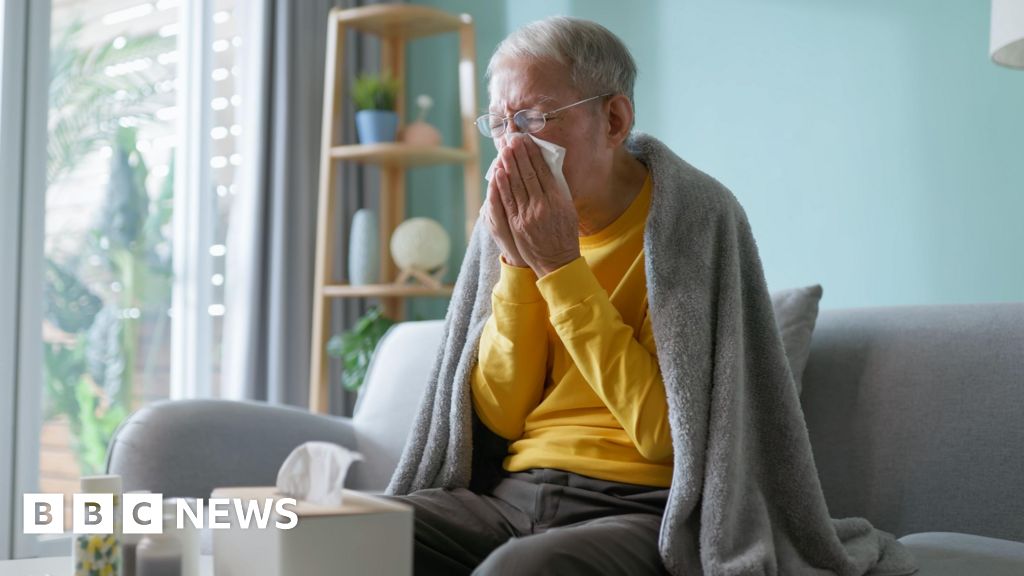
Is it a cold, flu or Covid?
Some symptoms of respiratory illnesses overlap, making it tricky to figure what you have. But there are common differences:
Colds
- symptoms appear gradually
- mostly affect nose and throat
- early sign – pressure in your ears
- chestier, mucus cough
Flu
- comes on suddenly
- feel wiped out
- fever, muscle aches, exhaustion
- need bed rest
- dry cough
Covid
- typical flu symptoms
- loss of taste or smell
- diarrhoea or tummy upset