

In a policy action long sought after by abortion opponents, the federal government now has codified a ban on Medicaid funds that support care provided at Planned Parenthood clinics and other locations. Section 71113 of the 2025 Federal Budget Reconciliation Law, prevents Medicaid payments to certain reproductive health care entities that provide abortion care for one year from the date of enactment. This ban includes all services including contraceptive care, preventive care, and other services, not only abortion. Based on the criteria in the law, three entities, Planned Parenthood affiliates, Maine Family Planning and Health Imperatives have been blocked from receiving federal Medicaid revenue. A handful of states, however, have announced they will fill in current gaps created by losses in federal funding to support access to care for their residents. These funds will enable providers to keep serving enrollees they care for in these states to differing degrees, but in the remaining states, the loss of Medicaid revenues will greatly limit their ability to continue to see Medicaid patients. This brief reviews the status of state commitments to funding reproductive health care providers affected by Section 71113 to date.
While there is ongoing litigation challenging Section 71113, the provision is currently in effect but a final decision on the merits of these cases might come after July 2026, when the one-year funding ban is no longer in effect. After the enforcement of Section 71113 became effective for Planned Parenthood in September 2025, some Planned Parenthood affiliates offered services to Medicaid beneficiaries on a free or reduced-fee basis, allowing patients to continue receiving care regardless of their ability to pay. However, federal Medicaid funds are not flowing into the clinics, and only a handful of states have stepped in to provide funding to support care. In September 2025, Planned Parenthood said they covered the costs of care provided to most of their patients who use Medicaid — an estimated $45 million in care. However, the organization stated that these efforts are unsustainable over the long run.
Planned Parenthood’s Role in Providing Family Planning Services to Medicaid Enrollees
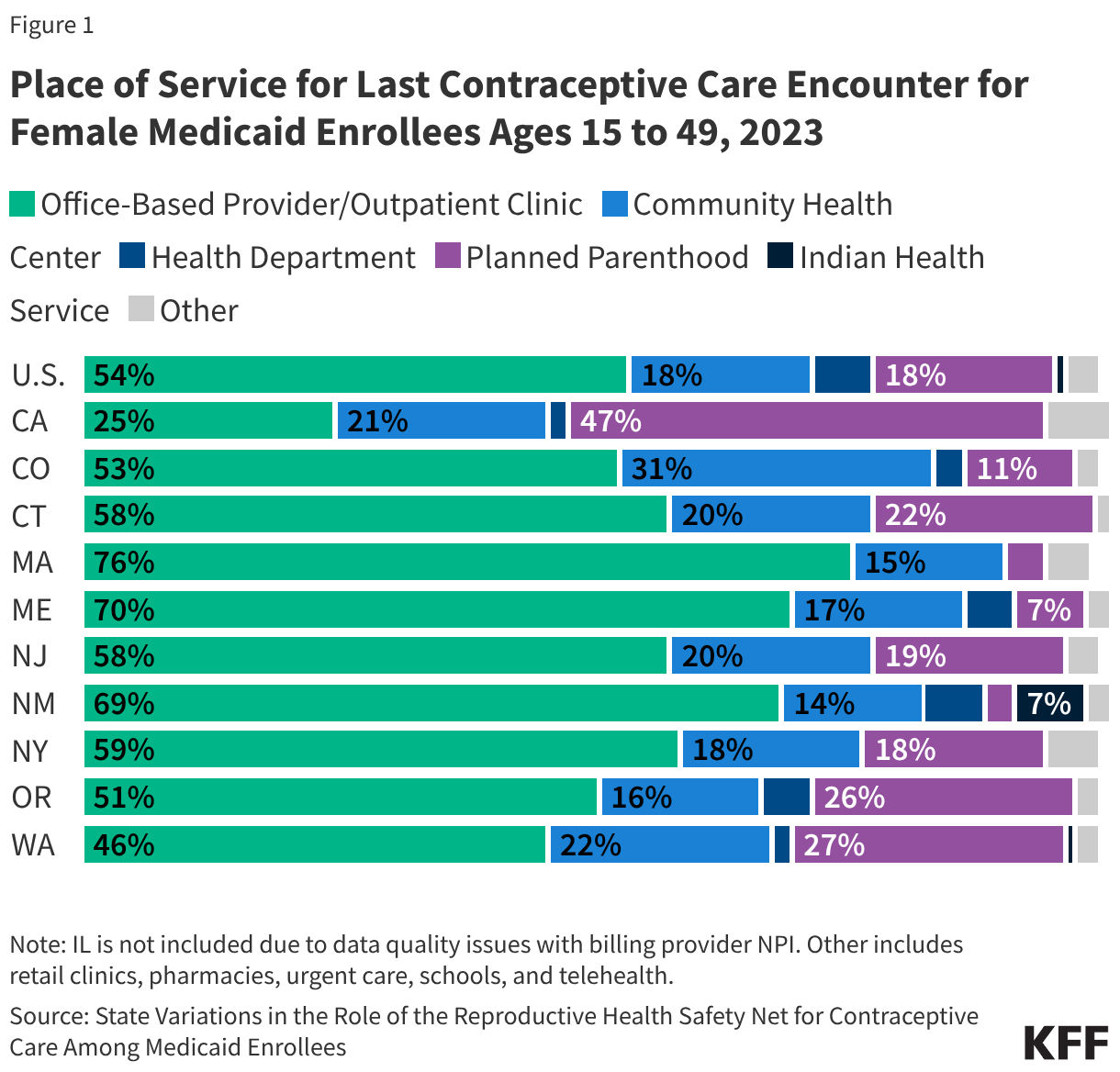
Planned Parenthood is a large provider of family planning services nationwide. Planned Parenthood affiliates maintain health centers in 46 states and the District of Columbia and provide services to over 2 million patients per year. Over half of Planned Parenthood’s patients rely on Medicaid for their health coverage, and a KFF analysis finds that nearly one in five (18%) Medicaid enrollees got their contraceptive care from a Planned Parenthood clinic in 2023 (Figure 1). This share is greater in states like California, and Wisconsin where nearly half and one third of female Medicaid enrollees who got contraceptive care went to a Planned Parenthood health clinic, respectively. Planned Parenthood health clinics are primarily located in rural or medically underserved communities, and sometimes are the only clinic in a community offering sexual and reproductive health care services including contraception. Due to the unique role Planned Parenthood plays in offering sexual and reproductive health care, research shows that Medicaid enrollees would be harmed if they were excluded from Medicaid reimbursement because they would face increased difficulties in accessing contraceptive methods, primary care, and other sexual and reproductive health care.
State Efforts to Limit Harm to Medicaid Enrollees Who Receive Care at Planned Parenthood Health Centers
Due to Planned Parenthood’s large role in providing family planning services to Medicaid enrollees, some states have committed to filling in gaps created by losses in federal revenues. In response to proposed budget cuts facing Planned Parenthood, eleven states (CA, CO, CT, IL, MA, ME, NJ, NM, NY, OR, WA) have allocated millions in funding to Planned Parenthoods to maintain access to care for their enrollees. All eleven of these states are also plaintiffs in a lawsuit challenging Section 71113. State responses have ranged from agreeing to cover the full cost of Medicaid services to allocating a specific amount of money for the year.
California
On October 23, 2025,California Governor Newsom announced a plan to allocate over $140 million in state funds to assist Planned Parenthood health centers due to losses in federal funding caused by Section 71113. California has over 7 Planned Parenthood affiliates who maintain over 100 health centers. At California Planned Parenthoods, over 80% of patients rely on public health insurance such as Medi-Cal and the Family Planning, Access, Care and Treatment Program (FPACT). KFF estimates that in 2023, 47% of California female Medicaid recipients received who received their last contraceptive visit of 2023 went to a Planned Parenthood clinic for that care.
Colorado
In August 2025, Colorado Governor Polis signed legislation (Senate Bill 25B-2) which does not appropriate a specified dollar amount to Planned Parenthood but instead asserts that Colorado will reimburse an organization designated as a “prohibited entity” under the 2025 Federal Budget Reconciliation Law using state funds. This guarantees state funding for Planned Parenthood clinics in Colorado providing care to Medicaid enrollees without placing a specific dollar amount on the allocation.
Connecticut
On December 18, 2025, Governor Lamont announced an allocation of $8.5 million to Planned Parenthood of Southern New England to make up for lost federal reimbursement for the period that Section 71113 is in effect.
Illinois
On December 23, 2025, the Illinois Department of Healthcare and Family Services announced a $4 million investment in Medicaid family planning services to offset the loss of federal Medicaid reimbursement for Planned Parenthood due to Section 71113. The Department estimates that Planned Parenthood received $4 million in federal Medicaid reimbursement in 2024 for services like contraception, sexual transmitted infection testing and treatment, cancer screenings, and other family planning services Illinoisans rely on.
Massachusetts
On July 24, 2025, Governor Healey announced a plan to provide $2 million in state funds to Planned Parenthood League of Massachusetts to support continued access to sexual and reproductive health including cancer screenings, contraception, and STI testing and treatment. These state funds are not sufficient to completely make up for the loss of federal funds. In 2023, Planned Parenthood League of Massachusetts received approximately $4.7 million in Medicaid payments in 2023, and the federal match in Massachusetts varies between 50% and 90% with a 90% match for family planning services. Massachusetts has not allocated any funds to Health Imperatives, another family planning provider in Massachusetts currently blocked from receiving federal Medicaid reimbursements.
Maine
The Maine Legislature passed two bills (LD 143, LD210),allocating over $6 million to family planning providers, including Planned Parenthood of Northern New England and Maine Family Planning.
New Jersey
In fiscal year 2023, the two Planned Parenthood affiliates in New Jersey collectively billed $6.9 million to New Jersey’s Medicaid program. The state paid $1.4 million of these claims, and the federal government paid the remaining $5.4 million. On December 24, 2025, Governor Murphy announced an allocation of $8 million to reproductive health care providers who have been blocked from receiving federal Medicaid funds. The allocation will cover both the state and federal Medicaid reimbursements that the Planned Parenthood affiliates would have received if not for Section 71113.
New Mexico
On October 3, 2035, New Mexico, Governor Grisham, signed emergency legislation that allocates $3 million to contract with Planned Parenthood for health services provided to Medicaid patients. Any unexpended balance remaining at the end of fiscal year 2026 will revert to the general fund.
New York
On October 24, 2025, New York Governor Hochul announced that the state will cover any funding gap Planned Parenthood experiences due to Section 711113. The state has instructed Medicaid providers who would be considered “Prohibited Entities,” to continue to submit claims, and they will be paid with state only dollars. Planned Parenthood has five affiliates that operate 48 clinics in the state.
Oregon
In Oregon, Planned Parenthood of Columbia Willamette received over $15 million of state and federal Medicaid dollars in 2024. In November 2025, their legislature allocated $7.5 million to Planned Parenthood affiliates in an emergency session for this coming fiscal year while Section 71113 is in effect.
Washington
Washington estimated that they paid over $23.8 million to Planned Parenthood in 2023 for services to Medicaid enrollees with $11.8 million of those funds coming from the federal government. On July 9, 2025, Governor Ferguson announced that the state would cover any gap in Medicaid funds Planned Parenthood experienced because they would no longer be eligible to receive funding from the federal government.